
API and routing
Customise the License Web portal and API routes, turn the Swagger API interface on or off, and manage API key pairs.
License Web lets you change the URL paths of the sign-in page and the REST API, so they are harder to guess. You also manage the API interface and API key pairs on the same page.
Go to Admin > API & Routing.
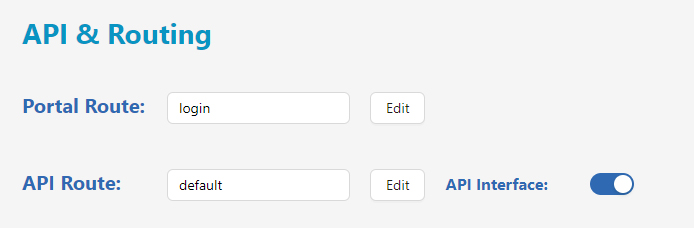
Portal route#
The portal route is the path of the sign-in page.
- Next to Portal Route, select Edit.
- Enter your own route, for example
myadmin124.
The sign-in page is now at https://lcweb.yourdomain.com/myadmin124.
API route#
The API route is the base path of the REST API.
- Next to API Route, select Edit.
- Enter your own route, for example
lcwebapi.
The API is now at https://lcweb.yourdomain.com/lcwebapi.
Note
The examples in the API endpoint reference use the path restapi. If you change the API route, use your route instead.
API interface#
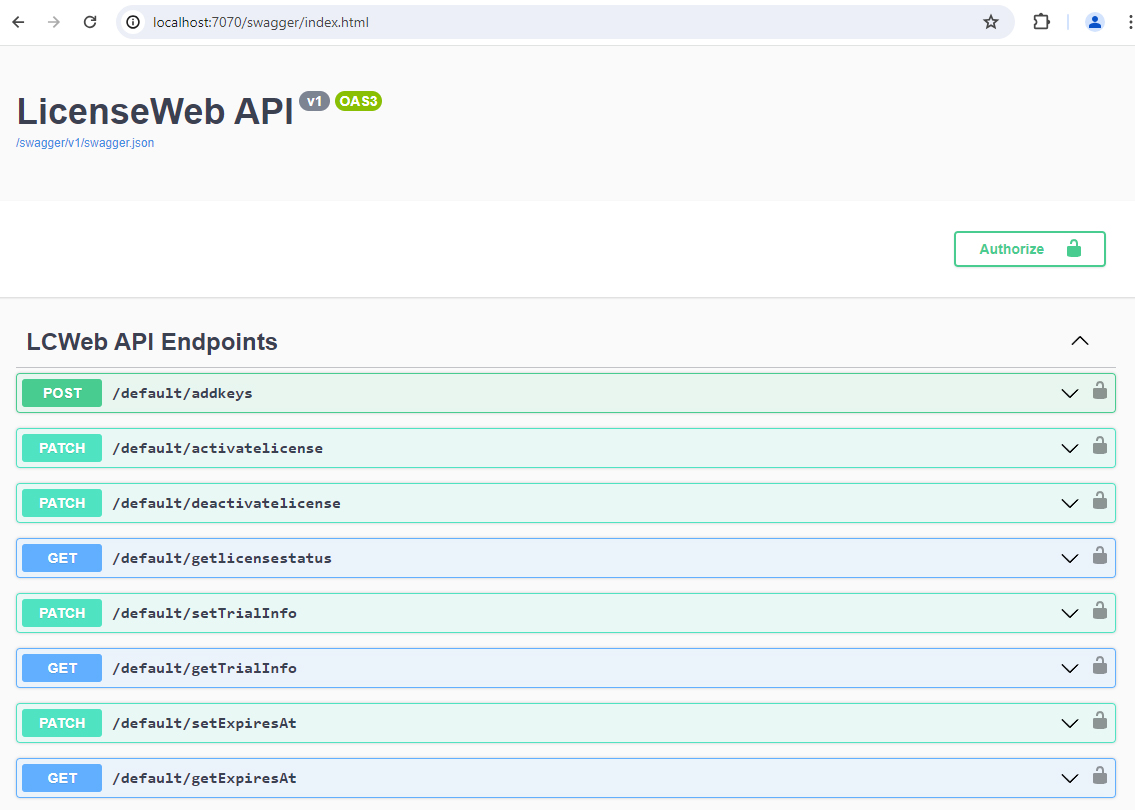
The API interface is a Swagger UI built on the OpenAPI standard. Use it during development to test API calls inside License Web, without tools such as Postman.
Turn it on or off with the API Interface switch. When it is on, open it at:
https://lcweb.yourdomain.com/swagger/index.html
Warning
Turn off the API interface when development is complete. Turn it on only when you need to refer to it.
API keys#
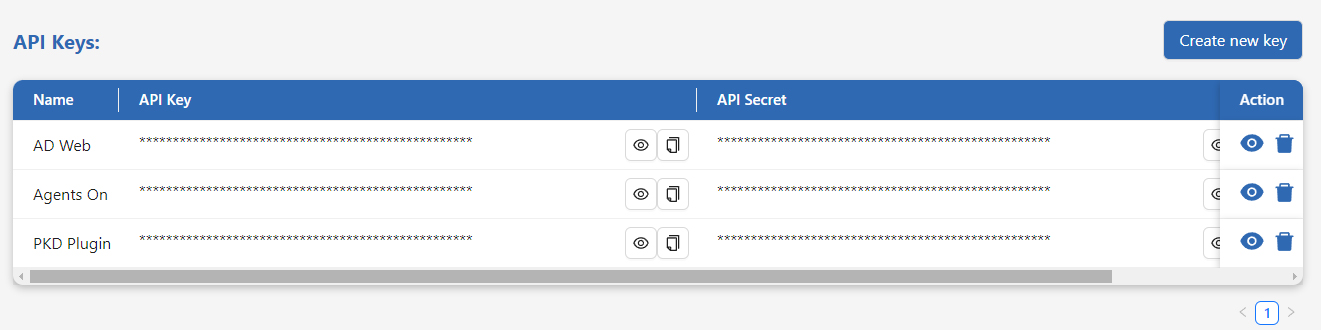
The REST API authenticates each call with an API key pair: an API Key and an API Secret. You can create as many key pairs as you need.
Why use several key pairs#
- A key pair per product. Dart Innovations uses a separate key pair for each product: AD Web uses one, Agents On another, and License Web itself has its own. Using one key pair for all your products also works.
- Rotating key pairs. When you release a new version of your product, you can give it a new key pair (for example a v2 pair). Keep the old pair until your users have upgraded, then delete it. You can do this for every new version if you like.
Create a key pair#
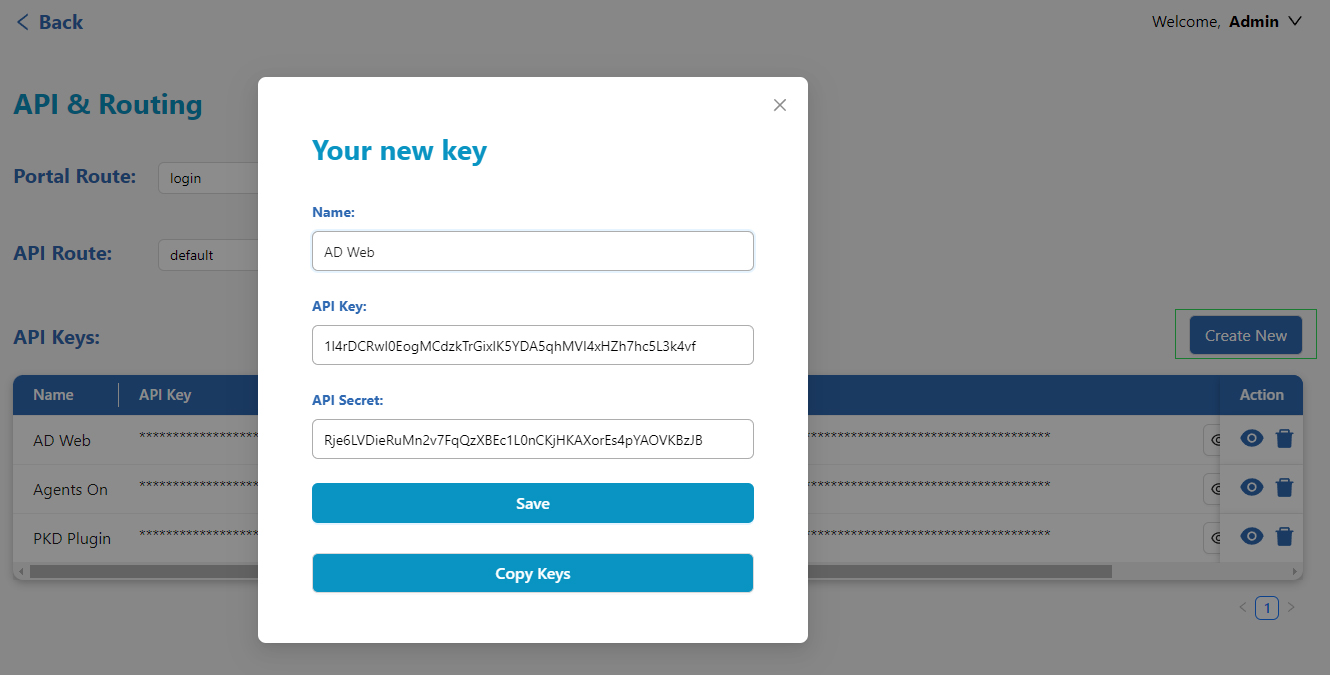
- Select Create New.
-
Enter a Name for your reference.
The API Key and API Secret are generated for you.
-
Select Copy Keys to copy the pair, then select Save.
You can also copy the keys from the list at any time after saving. Send them in the ApiKey and ApiSecret headers of your REST API calls.